


BY TOFTWOOD DENTAL PRACTICE
2 January 2026
Table of Contents
If you’re exploring tooth replacement options, you may have come across mini dental implants. These smaller alternatives to traditional implants are becoming popular among adults seeking a less invasive or more affordable way to replace missing teeth. Understanding what mini dental implants are and how they differ from standard implants can help you choose the right option for your dental care.
At Toftwood Dental Practice, we offer high-quality dental implants in Dereham, Toftwood and across Norfolk. This guide will help you explore whether mini implants may be an option worth considering.
Mini dental implants
Mini dental implants are small, titanium posts used to support replacement teeth. They function similarly to traditional implants but are narrower in diameter. While a standard implant is usually around 3.5–6mm wide, mini dental implants are typically 1.8–3mm.
Because of their reduced size, mini implants are often used in cases where:
- The bone is not strong or dense enough for a full-sized implant
- Patients prefer a procedure with less surgical intervention
- Stability is required for dentures, particularly lower-jaw dentures
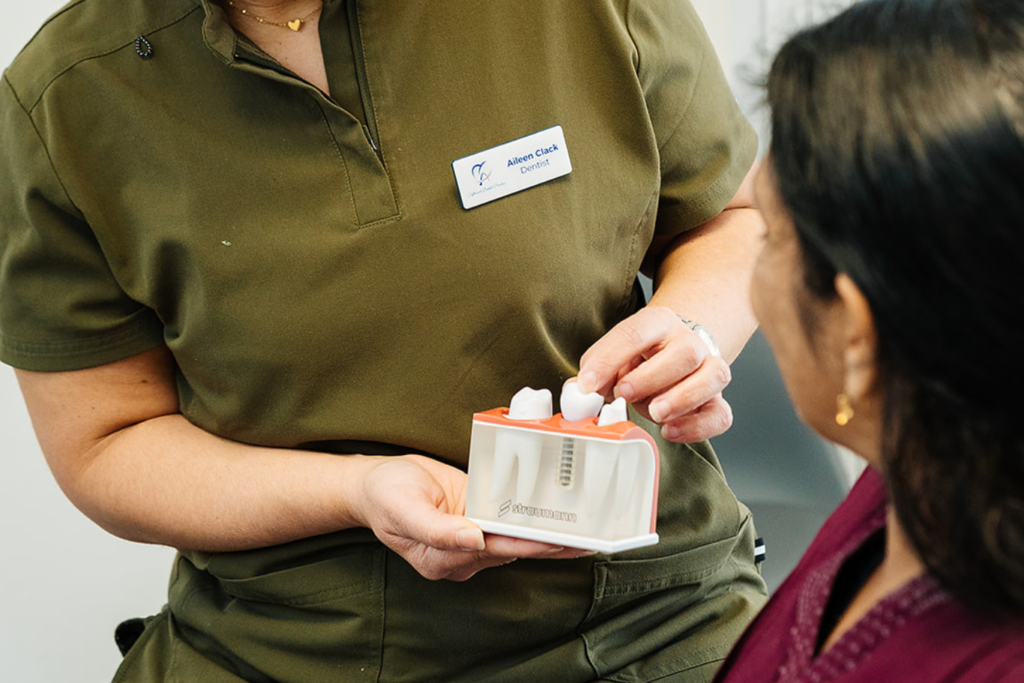
Remember that dental implants are artificial roots placed in the jaw to support replacement teeth, and mini implants do the same job but are simply smaller. They can also be used to secure dentures, helping improve confidence, comfort and daily function.
Benefits of mini implants
Mini dental implants can offer several advantages:
- Less invasive placement – Their smaller size often means less surgical intervention compared with traditional implants.
- Shorter healing times – Some patients may experience quicker recovery because the implant site is smaller.
- Can help stabilise dentures – Mini implants can make removable dentures feel more secure.
- Helpful for patients with low bone density – They may be an option when standard implants are not suitable without extra treatments like bone grafting.
- Potentially lower cost – Mini implants often involve fewer appointments and materials.
- Immediate loading in some cases – For certain patients, a denture or temporary restoration may be attached on the same day.
Are you a good candidate for a mini implant?
Mini dental implants may be suitable if you:
- Have mild to moderate bone loss and cannot undergo bone grafting
- Want to stabilise your lower denture
- Prefer a minimally invasive treatment
- Need a replacement for a smaller tooth, such as an incisor
- Are generally healthy with good oral hygiene
However, mini implants are not suitable for everyone. Patients with gum disease or active infection may need treatment first to make sure the gums and bone are healthy enough for a successful result.
Understanding how dental implants with gum disease are managed can help highlight why gum health plays such an important role in determining suitability for mini implants.
If you’d like personalised advice, get in touch with our friendly team at Toftwood Dental Practice for guidance on the best option for your smile.
Mini dental implants procedure
While procedures vary slightly depending on individual needs, the process typically involves:
- Consultation and assessment – Including X-rays or 3D scans to examine bone structure.
- Treatment planning – Your dentist will discuss suitable implant sizes, placement sites and expected outcomes.
- Implant placement – Mini implants are inserted into the jaw using a minimally invasive technique.
- Attachment of the restoration or denture – In some cases, this can be done on the same day.
- Healing and follow-up – You’ll return for check-ups to ensure the implant is stable and functioning well.
This approach is often quicker than a traditional implant procedure and may involve fewer appointments.
How much do mini dental implants cost?
Dental implants are usually provided privately. Costs vary depending on:
- The number of mini implants needed
- Whether they are used to support a denture or a single crown
- The complexity of the case
- Additional treatments required
- The clinician’s expertise and training
- Geographical location
At Toftwood Dental Practice, we provide transparent pricing for dental implant treatment in Toftwood, including options for dental implants in Norfolk, Dereham and surrounding areas.
For exact costs, we recommend booking a consultation so we can assess your individual needs.
Mini dental implants care
Good long-term care is essential for keeping your implants healthy and protecting the surrounding gums and bone. This includes:
- Brushing twice daily with fluoride toothpaste
- Cleaning around implants with interdental brushes or floss
- Attending regular check-ups and hygienist visits
- Stopping smoking, as it increases the risk of implant failure
- Maintaining good oral hygiene if wearing implant-retained dentures
- Following any specific cleaning advice your dentist or hygienist gives you for hard-to-reach areas
Call your dentist if you see bleeding gums, swelling, pain, or loosening around an implant. Early care can help prevent more serious problems. With proper care and regular professional monitoring, mini dental implants can support comfortable function for many years.

Conclusion
Mini dental implants can be a helpful option for adults seeking a less invasive, more affordable or bone-conserving alternative to standard implants. While they are not suitable for every case, they can offer excellent stability for dentures and replacement teeth when used appropriately.
If you’re considering mini implants, a consultation with a qualified clinician is the best first step.
FAQs
How long do mini dental implants last?
With good oral hygiene, mini implants can last several years. Longevity varies depending on gum health, bone support, and lifestyle factors such as smoking. The NHS advises that implant success depends on how well implants are cared for.
Are mini dental implants good for molars?
Mini implants are generally better suited to smaller teeth or for supporting dentures. Molars require significant chewing force, and standard implants are typically recommended where possible.
Are mini dental implants removable?
The implants themselves are fixed into the bone and are not removable. However, implant-retained dentures attached to mini implants can be removable for cleaning.
Are there any downsides to mini implants?
Potential limitations include reduced strength compared with full-sized implants, limited suitability for high-bite-force areas, and shorter expected lifespan in some cases. They are not appropriate for every patient, especially those with advanced bone loss.
This content is for informational purposes only. Consult a professional for personal advice.
Share this article:
Latest Posts

Types of Dental Implants
Discover the different types of dental implants and find the best fit for your smile!

Dental Implant: Step-by-Step Process
Explore with us the dental implant process step by step, from initial consultation to final restoration. Everything you need to know is in this article.

What Are Invisalign Aligners, And How Do They Work?
Straighten your smile with Invisalign, clear, removable aligners that fit your lifestyle. Available now at Toftwood Dental Practice in Dereham.
What to Know Before Getting Dental Implants
Thinking about getting a dental implant? Keep reading and discover some important things to know before getting one, like benefits, side effects, costs, and more.
Dentist in Dereham
Become a patient by contacting us today!