Dentist showing a model of a dental implant.
Picture of BY TOFTWOOD DENTAL PRACTICE

BY TOFTWOOD DENTAL PRACTICE

11 June 2025

Table of Contents

Missing teeth can affect more than just your smile; they may impact how you eat, speak, and even how you feel about yourself. Dental implants are a long-lasting solution for tooth loss available today. Whether you’ve lost one tooth or several, there is a range of implant types to suit different needs. 

In this article, we explain the main types of dental implants and their advantages.

Traditional Implants (Endosteal Implants)

Illustration with an example of a endosteal implant.

According to the Royal College of Surgeons, these are the most commonly used dental implants in the UK. Endosteal implants are shaped like small screws and are inserted directly into the jawbone. Once the area has healed, a dental crown or other restoration is fitted on top. Depending on the number of missing teeth, this procedure may include a single or multiple tooth implants.  

Find out here how the dental implant process works, step by step. 

May be suitable for: Most patients with a healthy jawbone.

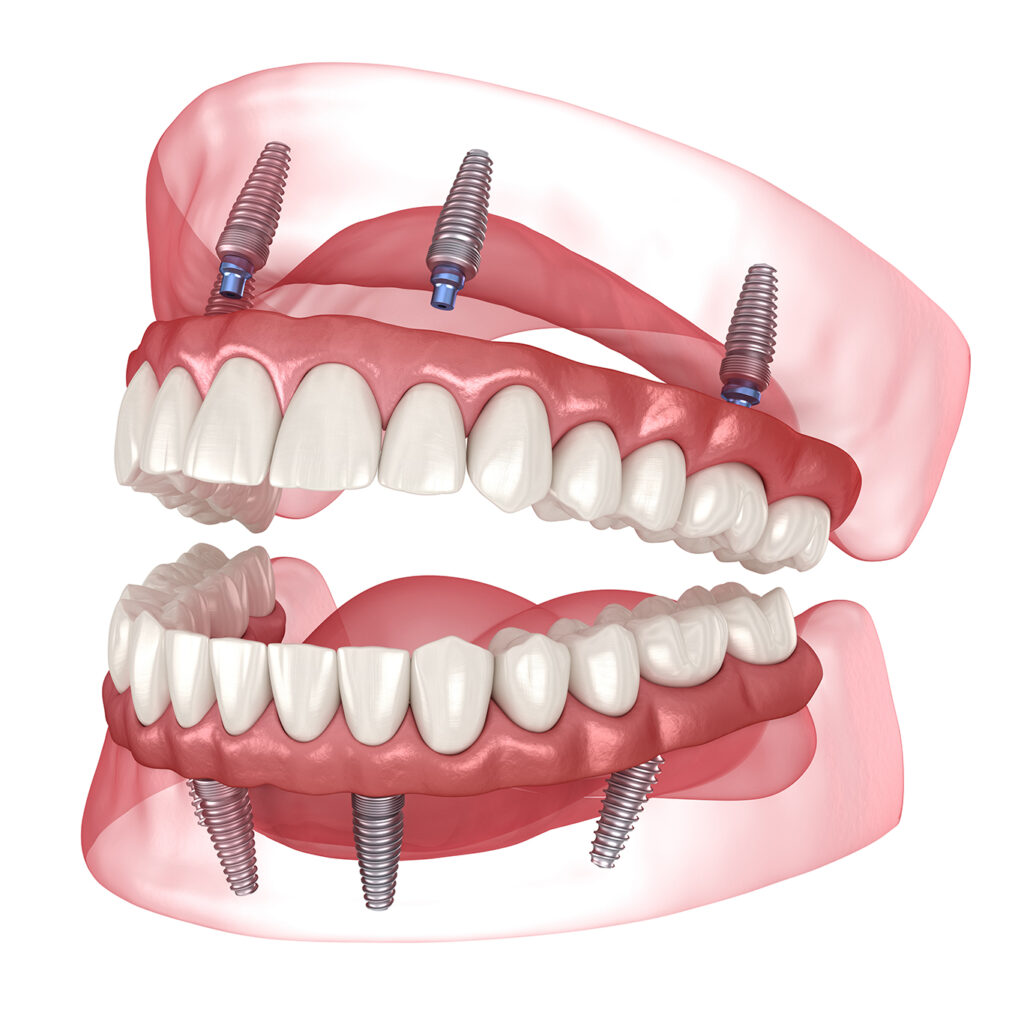
All-on-4

Illustration with an example of an All-on-4

The all-on-4 method uses four implants to support a full arch of replacement teeth, often fitted the same day the implants are placed. It’s ideal for patients with little remaining teeth or significant tooth loss. 


May be suitable for: Full mouth restorations.

Mini Dental Implants

Illustration with an example of a mini dental implant

Smaller in diameter than standard implants, mini dental implants are often used where space or bone availability is limited. 


May be suitable for: Narrow gaps or stabilising lower dentures.

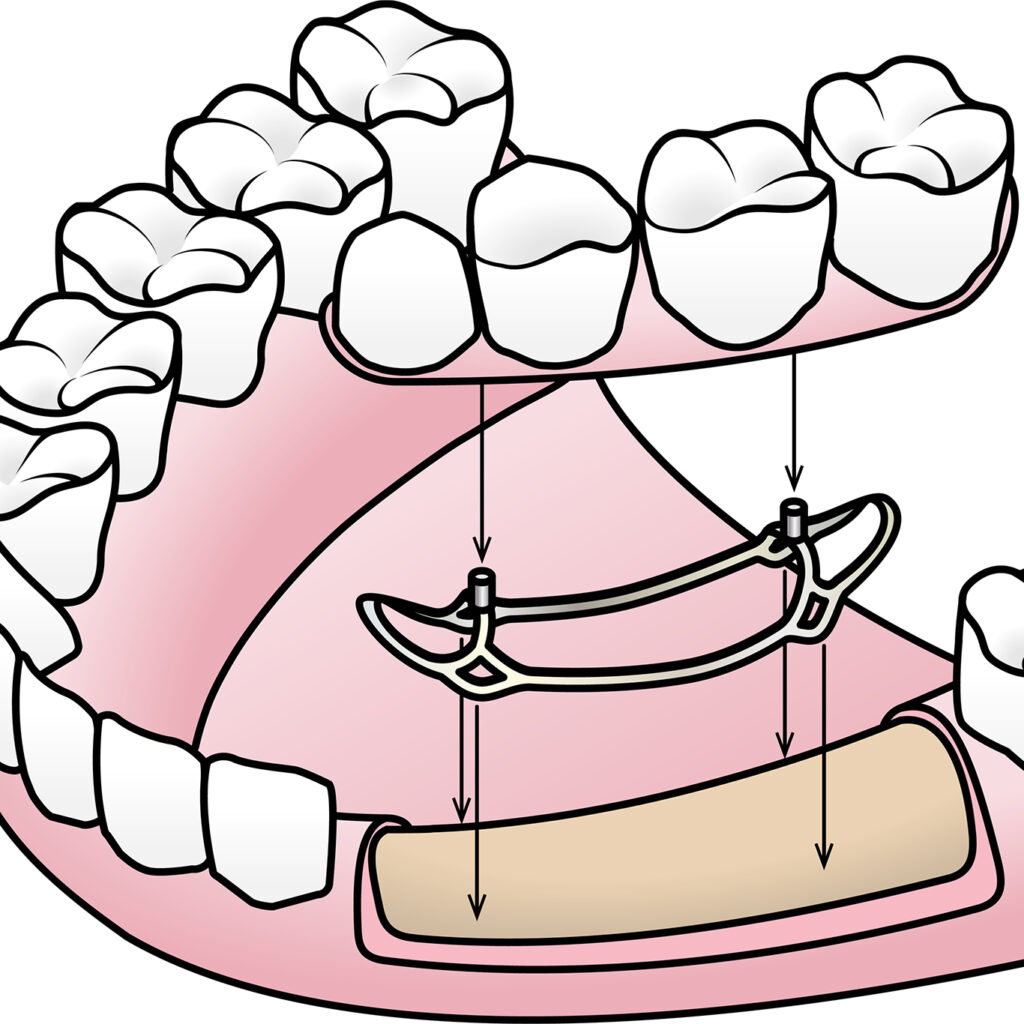
Subperiosteal Implants

Illustration with an example of a subperiosteal implant

Subperiosteal implants sit on top of the jawbone but underneath the gum tissue. A metal frame holds the implant posts above the gumline. This type works for both single and multiple dental implants. 


May be suitable for: Patients with insufficient bone height who cannot undergo grafting.

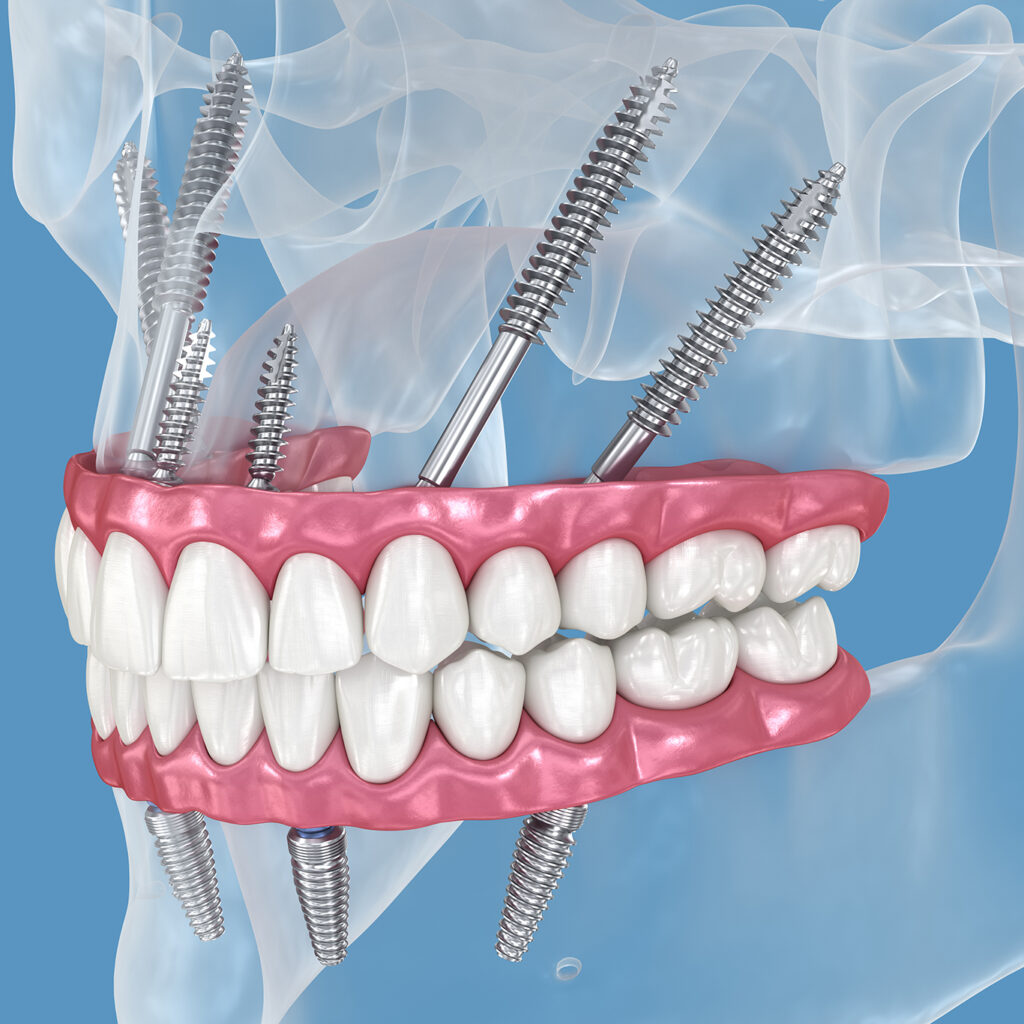
Zygomatic Implants

Illustration with an example of a zygomatic implant

Used in cases where there is severe upper jawbone loss, zygomatic implants are anchored in the cheekbone rather than the jaw. 


May be suitable for: Patients unsuitable for conventional implants.

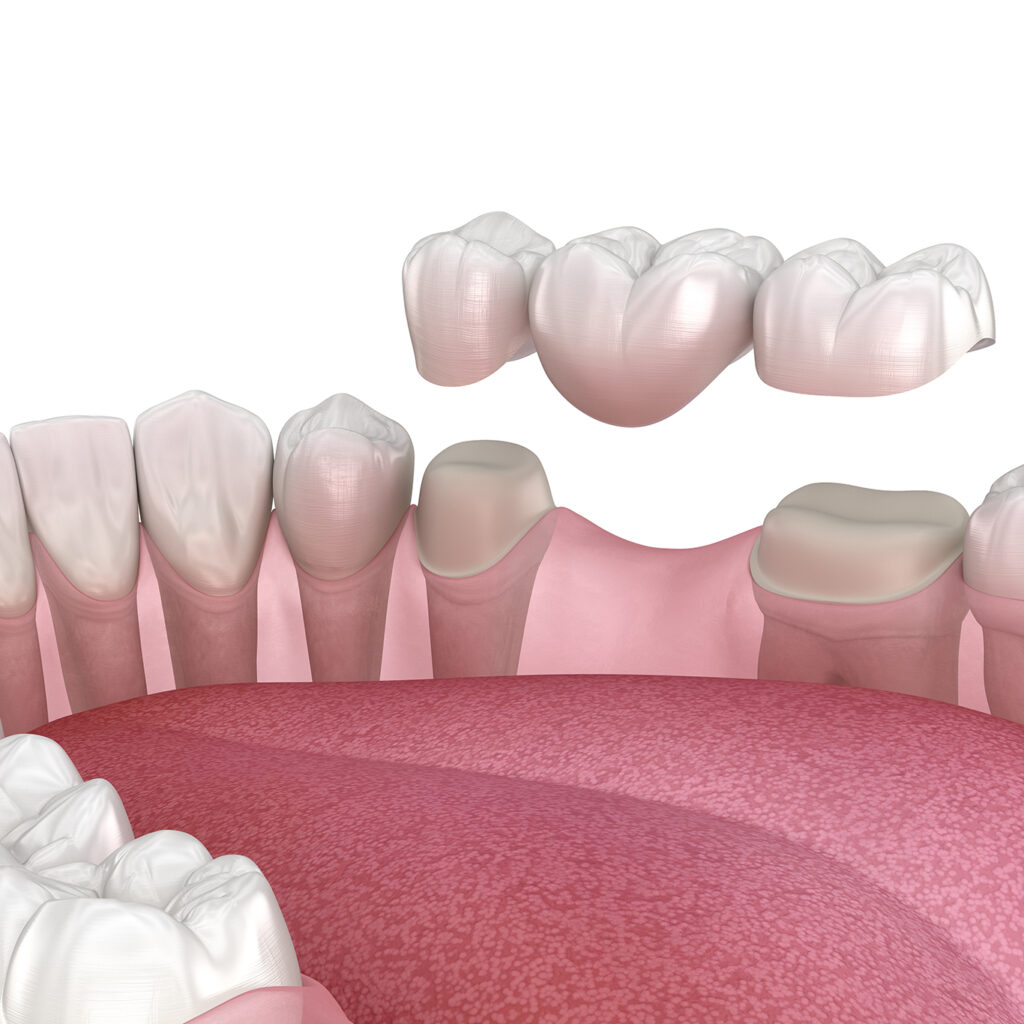
Implant-Supported Bridges

Illustration with an example of an implant-supported bridge

This option involves placing dental implants at either end of a gap and securing a dental bridge between them. It’s a good choice when several teeth in a row are missing. 


May be suitable for: Large gaps of multiple missing teeth.

Implant-Retained Dentures

Illustration with an example of an implant-retained denture

These removable dentures are anchored onto dental implants, providing a better fit and stability than traditional dentures. They can be easily removed for cleaning. 


May be suitable for: Patients who wear full or partial dentures.

How to Choose a Dental Implant?

Choosing the right dental implant involves a full clinical assessment and consideration of your oral health and bone structure.  

At Toftwood Dental Practice, we take the time to understand your needs and explain all available options in a clear, friendly way. Our experienced team in Dereham will guide you through the dental implant procedure with honest advice and personalised care.  We will use diagnostic tools to assess the bone in your jaw and recommend the most appropriate type of implant.   

Factors to consider include: 

  • Number of missing teeth 
  • Bone density and volume 
  • General health and any medical conditions 
  • Budget and treatment timeline 

No matter your starting point, we’re here to support you every step of the way with professional care you can trust. Book an appointment with us!

Dentist in Dereham
Are you looking for a dentist in Dereham?
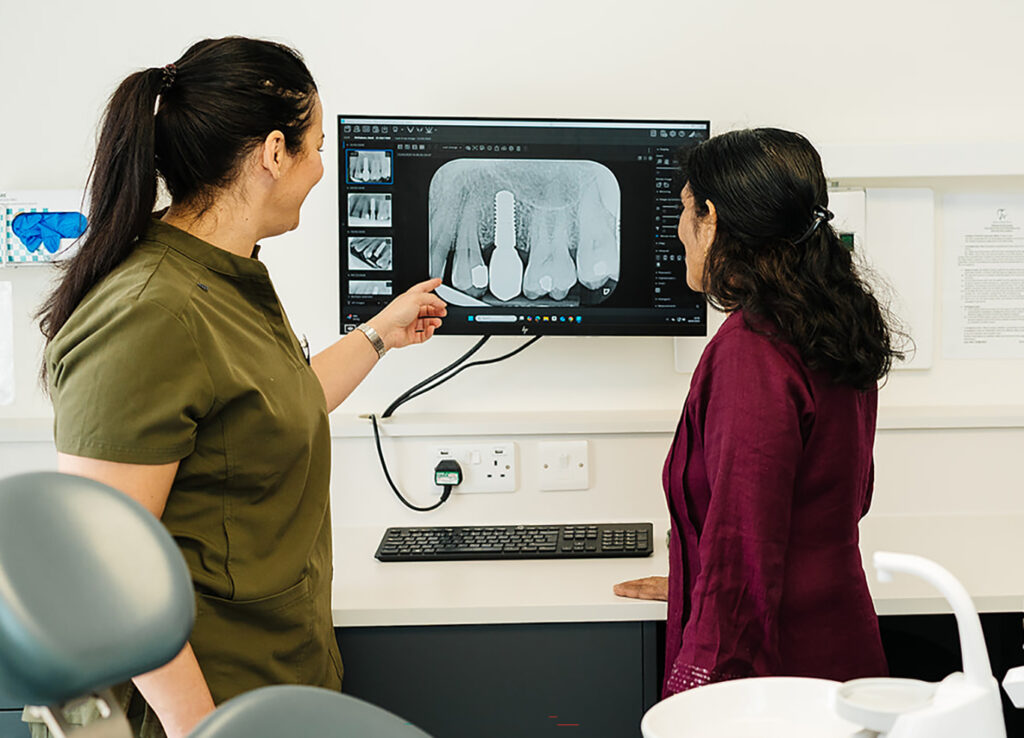
A female dental professional shows a patient a dental X-ray on a computer screen, highlighting a dental implant in the upper front teeth.

Conclusion

Dental implants come in various shapes, sizes, and techniques, each designed to meet different needs. Whether you need to replace one tooth or an entire arch, there’s a dental implant solution that may suit you. 

At Toftwood Dental Practice, we use the latest techniques and provide personal care. We help you restore your smile with confidence. We’re proud to serve the Norfolk community.   

Ready to find out which dental implant is right for you? Get in touch today to book your consultation.

FAQs

How do I know which type of dental implant is right for me?

We will carry out a comprehensive assessment of your oral and general health, including digital imaging. Based on this, we will let you know what options are available to meet your needs. 

Most implants are made from titanium, which is biocompatible and integrates well with bone. Some implants use zirconia, a metal-free alternative, particularly for patients with sensitivities or cosmetic concerns. 

There’s no one-size-fits-all answer. Endosteal implants are the most commonly used type. However, other types of implants may be better suited to patients’ needs. A certified dentist will help you understand the ideal type for your specific case.    

A dentist should evaluate your specific case to offer you the best solution for it.

Yes. For example, a patient might have single implants in one area and an implant-supported bridge in another. We will design a tailored treatment plan to suit your individual needs.   

This content is for informational purposes only. Consult a professional for personal advice.

Share this article:

Facebook
LinkedIn
Email
WhatsApp
X

Latest Posts

Dentist in Dereham

Looking for a new dentist?
Become a patient by contacting us today!

Follow us

DENTIST IN toftwood

We're ready to welcome you...

Get in touch via the form below where a member of the team will be in touch asap or by contacting our email or phone number

Leave a Reply

Your email address will not be published. Required fields are marked *