


BY TOFTWOOD DENTAL PRACTICE
17 September 2025
Table of Contents
If you’re looking up dental implants before and after, you probably want to know what the procedure is really like, how long healing takes, and how to care for dental implants so they last. Whether you live in Toftwood, Dereham, Norfolk or further afield, having clear expectations is important when considering treatment.
This post explains what happens before, during and after implant surgery, and how to do dental implant aftercare properly.
In this article, we’ll explore what each option offers and its main differences.
What to expect before dental implants?
Before implants are placed, there are several steps. Good preparation helps ensure treatment is successful and reduces risks.
Initial consultation and assessment
At your first meeting with an implant specialist, you’ll usually:
- Have dental x-rays and a CBCT scan to see the bone quality and position of nearby structures (nerves, sinuses).
- Review your medical history: any illnesses, medications, smoking, or conditions that might affect healing.
- Discuss what you want from treatment, how you want your teeth to look, feel and function.
- Plan the treatment: this may include removing teeth first, carrying out bone grafting, or doing other preparation. NHS guidance notes that extractions are often done 6–10 weeks before implants, to give the gums time to heal.
If you’d like, you can also read about the full procedure in more detail in our post dental implant process step by step.
Preparing for surgery
To get ready for the implant surgery, you may be advised:
- To stop smoking, as smoking slows healing and increases the risk of complications.
- Follow your dentist’s instructions about food, drink and medication if you are having sedation or a general anaesthetic. If you only need a local anaesthetic, you can usually go home soon afterwards.
- Arrange transport if you are having sedation, as you will not be able to drive.
Bone grafting and other preparations
If your jaw or gums are not yet ready for implant placement, your dentist may recommend additional treatments. These help create a secure foundation for the implant and improve long-term success:
- Bone grafting: if there isn’t enough bone to place an implant securely, bone or bone-like material can be added. NHS guidance says that grafting can happen at the same time as placing an implant. It can also be done earlier if more bone is needed. This adds to the healing time, as the bone needs to join with the implant and become strong before it can be restored.
- Sinus lift (upper jaw only): in some cases, the sinus cavity is too close to where the implant will sit. A sinus lift adds bone beneath the sinus lining to create the necessary space and support.
- Soft tissue grafting: If the gums are too thin or have pulled back, we can graft a small piece of tissue. This tissue often comes from the palate. It helps cover the implant better and protects it from infection.
- Tooth extraction: If damaged teeth that cannot be saved are still in place, your dentist may need to remove them. NHS guidance notes that dental extractions are often carried out 6–10 weeks before implant surgery to allow the gum to heal properly.
How long do dental implants take to heal?
Healing happens in several phases. How long it takes depends on your health, the complexity of the procedure, and how well you follow aftercare instructions.
Stages of healing
Here is an outline of what to expect:
|
Stage
|
What’s happening
|
Typical time frame
|
|---|---|---|
|
Immediate post-surgery
|
Gums heal, stitches are placed or removed. You may get swelling, bruising, some bleeding, soreness.
|
First 1-2 weeks
|
|
Early bone healing / osseointegration start
|
The implant begins to fuse with bone, soft tissue settles. Sensitivity reduces.
|
Weeks 2-6
|
|
Bone integration & stability
|
The bulk of osseointegration (bone growing around implant) happens. Implant becomes stable enough for final restoration.
|
2-6 months for many people. May be longer if bone grafts were done or in certain areas of the jaw.
|
|
Final restoration
|
Crown, bridge or denture part is placed when implant is stable. The gum shape is refined.
|
Usually after 3-6 months, sometimes more depending on the case.
|
What affects healing time?
Factors that make healing faster or slower include:
- Whether bone grafting or sinus lift surgery was needed.
- Your overall health (for example, diabetic control, immune function and nutrition).
- Smoking or vaping: both slow healing and increase the risk of failure.
- The implant’s position: upper jaw sites can take longer than lower jaw.
- How carefully you follow after-care and cleaning instructions.
How to care for dental implants
Good dental implant aftercare is important both in the weeks after surgery and for long-term success. The Association of Dental Implantology (ADI) emphasises that effective cleaning and regular check-ups are key to keeping implants healthy.
Here are essential aftercare steps:
1. Maintain good oral hygiene
- For the first week, avoid brushing directly over the implant site. NHS guidance recommends using a gentle antimicrobial mouthwash (such as chlorhexidine) to reduce bacteria.
- After about a week, or when advised, begin brushing gently with a soft-bristled brush. Clean between implants and teeth using interdental brushes or floss.
2. Schedule regular checkups
- Follow-up appointments will be arranged during the healing period (often at 1–2 weeks, then later checks).
- Long-term, regular visits with your dentist and hygienist help detect problems early, such as inflammation or bone loss.
3. Make dietary adjustments
- Stick to soft foods first and avoid hard, crunchy or hot foods.
- Gradually reintroduce normal foods as healing progresses.
4. Lifestyle adjustments
- Avoid smoking, before and after surgery, as it harms healing.
- Limit alcohol for at least 24 hours after surgery. NHS guidance recommends avoiding it during early healing if possible.
- Avoid high-impact physical activity for the first few days, as this can raise blood pressure and disturb healing.
5. Manage pain and discomfort
- Mild pain, swelling and bruising are normal and usually last up to a week.
- Over-the-counter painkillers such as paracetamol or ibuprofen are usually enough.
- Cold packs can reduce swelling in the first 24 hours.
Before and after dental implants: The visual results you can expect


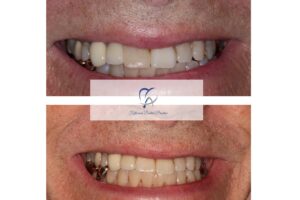
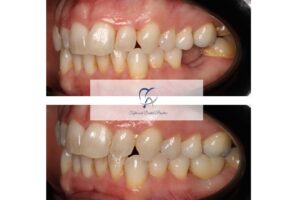
Although each case is unique, there are some common visual changes people notice after getting dental implants:
- Replacement of missing teeth restores your smile, so you may see immediate changes after final restoration (crowns, bridges, dentures).
- Gum shape around the implant site often improves once healing is done, contouring, and a healthier appearance.
- Matching the colour, shape and size of the implant crown to your existing teeth helps make it look natural.
Many patients describe improved comfort when eating, clearer speech, and renewed confidence in their appearance.
Video Testimonial of a dental implant Patient at Toftwood Dental Practice:
FAQs
Here are some common questions patients have when considering dental implants, with evidence-based answers:
Can I get dental implants if I have bone loss?
Yes, in many cases. Patients with reduced bone volume may need bone grafting or sinus lifting first. According to the NHS, small bone defects can sometimes be grafted at the same time as the implant, but larger defects usually need grafting first.
How long after dental implants can I drink alcohol?
You should avoid alcohol for at least 24 hours after the surgery. After the early healing phase, and once your dentist confirms recovery is on track, moderate drinking is usually fine. Alcohol can increase swelling, bleeding risk, and delay healing.
Can I have dental implants with gum disease?
Active gum disease (periodontal disease) should be treated and under control before implant treatment. If not, it increases the risk of infection and may reduce implant success. Afterwards, excellent oral hygiene is essential to prevent inflammation around implants (peri-implantitis). ADI highlights that ongoing maintenance is crucial.
Is swelling after a dental implant normal?
Yes, swelling and some bruising are very common. They tend to peak around 24-48 hours after surgery and then gradually settle. If swelling is extreme, getting worse after a few days, or accompanied by fever or pus, contact your dentist. NHS guidance notes swelling/bruising are common but should reduce in a week.
Is it safe to have dental implants in Turkey?
There is a growing trend for people travelling abroad for dental treatment (sometimes called “dental tourism”). While cost savings can seem attractive, there are risks you need to think about:
- Standards of care, materials used, follow-up appointments may vary.
- Aftercare can be more difficult when you’re far from the clinic.
- If complications arise (infection, incorrect placement, etc.), dealing with them from abroad can be harder.
If you’re considering this, please read our blog post ‘Turkey teeth’ to compare what to expect vs what is offered locally from dental care in Dereham.
Conclusion
When looking at dental implants before and after, it’s important to remember that it’s not just about the final look. Understanding the process, healing time, and how to care for your implants so they stay healthy is important. With good planning, realistic expectations, and following strong aftercare (hygiene, checkups, diet, lifestyle), many people achieve long-lasting, natural results.
Let’s work together to make sure your implants serve you well for years to come.
This content is for informational purposes only. Consult a professional for personal advice.
Share this article:
Latest Posts

Types of Dental Implants
Discover the different types of dental implants and find the best fit for your smile!

Dental Implant: Step-by-Step Process
Explore with us the dental implant process step by step, from initial consultation to final restoration. Everything you need to know is in this article.

What Are Invisalign Aligners, And How Do They Work?
Straighten your smile with Invisalign, clear, removable aligners that fit your lifestyle. Available now at Toftwood Dental Practice in Dereham.
What to Know Before Getting Dental Implants
Thinking about getting a dental implant? Keep reading and discover some important things to know before getting one, like benefits, side effects, costs, and more.
Dentist in Dereham
Become a patient by contacting us today!